Question page
Can AI generate Instagram captions that sound like you?
Ryze AI · Updated
Yes, AI can generate Instagram captions that sound like you, but only when it works from your actual material: a past caption, a rough note, or a Reel that already performed well. Ask a generic tool to "write an engaging caption" and you get generic output; feed it your draft or your voice and the gap closes fast. The catch nobody mentions: even the best output still needs a five-second edit pass before you post it, in 2026 just as much as it did two years ago.
- AI sounds like you when it's fed your own drafts, past captions, or a successful Reel link, not a blank prompt.
- Trndr trains on 1M+ high-performing Reels and carousels to adapt hooks and structure to your input.
- Generic caption generators without voice input produce generic captions, not your captions.
- A featured Trndr user gained 5K Instagram followers and 2K Telegram followers from two Reels built this way.
- Manual editing before posting stays non-negotiable no matter which AI tool you use in 2026.
Why this matters
Most creators ask AI the wrong question. They type "write me 10 Instagram captions" into a blank chat window and get back the same flat, adjective-stuffed copy every other account is also getting back. The tone problem isn't the model, it's the input.
An AI trained only on general internet text defaults to a neutral, slightly corporate voice. An AI trained on your actual captions, or on a corpus of proven hooks from accounts similar to yours, has something to imitate. That's the difference between "sounding like AI" and sounding like you using Trndr as the input-to-output layer.
Can AI generate Instagram captions that sound like you?
The short version: it depends entirely on what you give it to work with. Here's how the three common approaches actually compare.
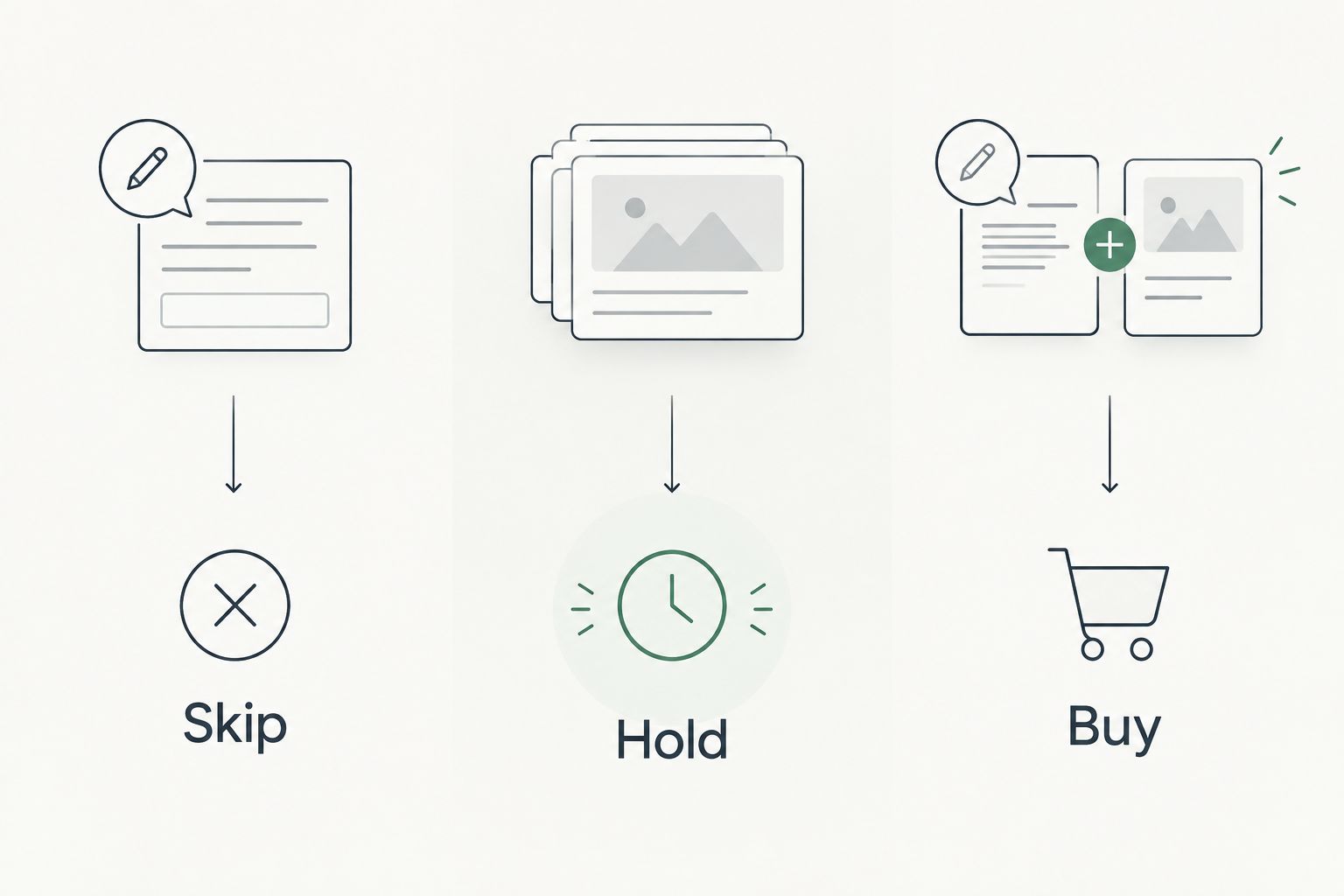
| Approach | What it needs from you | Sounds like you? | Best for | Verdict |
|---|---|---|---|---|
| Generic AI prompt (blank ChatGPT) | Nothing, a topic | Rarely | Quick filler captions | Skip |
| AI trained on your own past posts | A handful of your captions | Sometimes | Accounts with an established archive | Hold |
| AI trained on viral hooks + your draft/idea | One idea, note, or Reel link | Usually | Creators starting fresh or scaling fast | Buy |
The pattern across all three: the more specific material you hand the AI, the closer the output lands to your actual voice.
Generic AI prompts: "write me an Instagram caption"
This is the default move for most people, and it's why so much AI-written social copy reads the same. A blank prompt gives the model nothing to anchor tone, rhythm, or personality to, so it falls back to safe, average phrasing. Verdict: Skip unless you're just brainstorming topics, not final copy.
AI trained on your own past captions
Feeding a tool your last 20-30 captions gives it a real pattern to match: your sentence length, your emoji habits, your sign-off style. This works, but it requires you to already have a decent archive and it doesn't help with hooks or structure, just tone. Verdict: Hold for accounts with history, weak for new accounts.
AI trained on viral hooks and structure, adapted to your input
This is where Trndr's approach differs: instead of only mimicking your past tone, it's trained on more than 1 million high-performing Reels and carousels and adapts proven hook structures to whatever you give it, an idea, a rough note, a draft, or a successful Reel link. You start in Workshop, drop in your input, and get back captions, hooks, and scripts shaped by what's already working in your niche rather than a cold start. Verdict: Buy for creators, boutique agencies, and SMM specialists who need format-ready output fast.
Why AI-generated captions don't sound like you
When an AI caption misses your voice, it's usually one of these:
- No source material — you asked cold, with no draft, note, or example to anchor tone
- No niche training — the model was trained on general web text, not on content in your category
- Default tone bleed — most base models default to a polished, slightly formal register
- No hook adaptation — the caption states a fact instead of opening with a proven hook structure
- Skipped editing pass — the output went straight to publish with zero human review
- Wrong platform format — a caption written for LinkedIn tone posted under an Instagram Reel
Is ChatGPT good at writing Instagram captions in your voice?
ChatGPT can write in your voice, but only when the prompt includes real examples of your past writing or a style breakdown you build yourself. On its own, without that setup, it produces the same neutral tone for every user, which is why tools trained specifically on social caption formats tend to need less manual prompting to get close.
How do I know if my AI captions actually sound like me?
Read the caption out loud and ask if you'd say that sentence to a friend. If the answer is no, the issue is almost always tone-default, not the platform, and it's fixable by feeding the tool a real draft or one of your top-performing posts instead of a blank topic request. Checking how your Reels actually perform alongside caption tests tells you whether the voice match is landing with your audience or just with you.
Can AI write Instagram captions from a Reel link instead of a prompt?
Yes, some tools accept a link to a successful Reel and reverse-engineer the hook, pacing, and caption structure from it rather than starting from a topic prompt. This matters in 2026 because Reel-to-format adaptation removes the guesswork of describing your own style in words, which most people are bad at doing accurately.
Beyond captions, the same voice-matching problem shows up in carousels and scripts. A carousel built from a proven swipe structure and your own idea reads differently than one built from a generic "design tips" prompt, and a teleprompter pass while recording catches the lines that sound written rather than spoken.
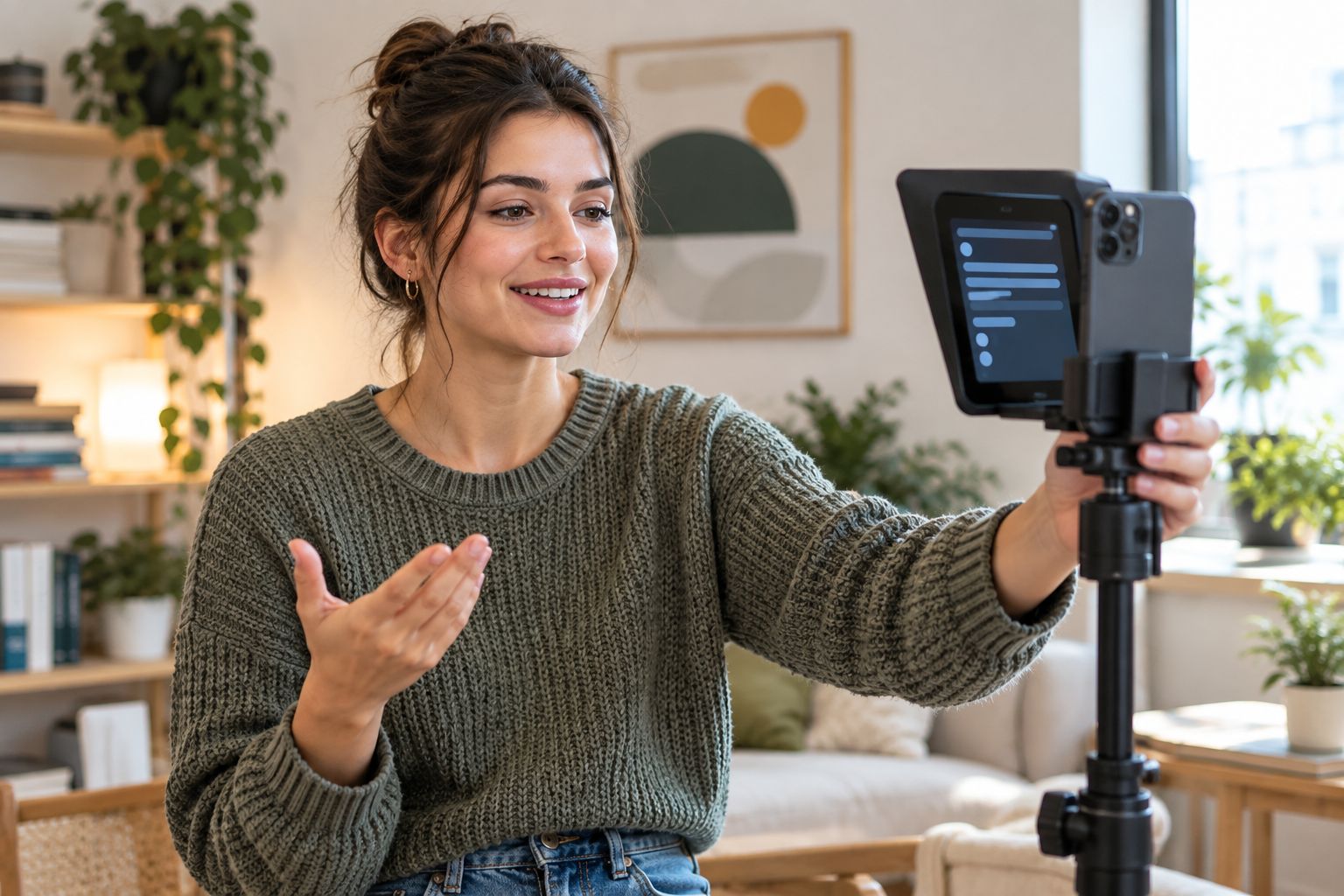
Social media managers running multiple client accounts run into this constantly: an SMM specialist working a highly specific client niche needs captions that match that client's voice, not a house style. Adapting from that client's own top Reels, rather than a blank prompt, is what keeps the output usable without a rewrite.
Turn one idea into on-brand captions
Start from a draft, note, or Reel link and get formats shaped to your voice.
FAQ
Can AI generate Instagram captions that sound exactly like me?
AI generates captions that sound like you when it's fed your own drafts, past captions, or a successful Reel link rather than a blank topic prompt. Tools trained on your input plus proven hook structures get closer than a cold ChatGPT request, but a quick edit pass before posting still matters in 2026.
Is ChatGPT good enough to write captions in my voice?
ChatGPT can approximate your voice if you paste in examples of your past captions or describe your style in detail. Without that input it defaults to a neutral, polished tone that reads the same across every user.
How do I train an AI to match my writing style?
Feed it your best-performing captions, a rough draft, or a Reel that already worked instead of a topic prompt. The more specific and recent the material, the closer the match.
Do AI-generated captions still need editing before I post them?
Yes, every AI caption benefits from a short read-aloud edit pass before publishing. Even close voice matches occasionally produce a phrase you wouldn't actually say.
Can AI write Instagram captions from a TikTok or Reel link?
Some tools accept a link to a high-performing Reel and adapt its hook and caption structure to your input rather than requiring a written prompt. This works for creators who have a proven post but no idea how to describe its structure in words.
What's the difference between an AI caption and an AI hook?
A hook is the opening line built to stop the scroll, while the caption is the fuller text underneath it. Tools trained on viral content typically generate 15+ hook options alongside the caption so you can test which opener performs.
Does Trndr work for carousels too, not just captions?
Trender turns one idea, draft, or Reel link into five ready-to-post formats, including designed carousels, Reel scripts, and Telegram posts, not captions alone. It's trained on more than 1 million high-performing Reels and carousels to adapt structure across formats.
How much of my own content does an AI tool need to learn my voice?
A handful of your best captions or even a single successful Reel link is enough for tools designed around adaptation rather than blind generation. More history helps, but it isn't required to start.
One last thing
The fastest fix for AI captions that don't sound like you isn't a longer prompt or a style guide, it's feeding the tool one Reel or caption that already worked and letting it reverse-engineer the pattern. Creators who skip the blank-prompt step entirely and start from a real input consistently get output that needs less rewriting, which is the whole point of using AI here in the first place.